In the world of overland travel with a 4×4 pickup and camper cabin, achieving the right balance between weight, autonomy and comfort is not easy.
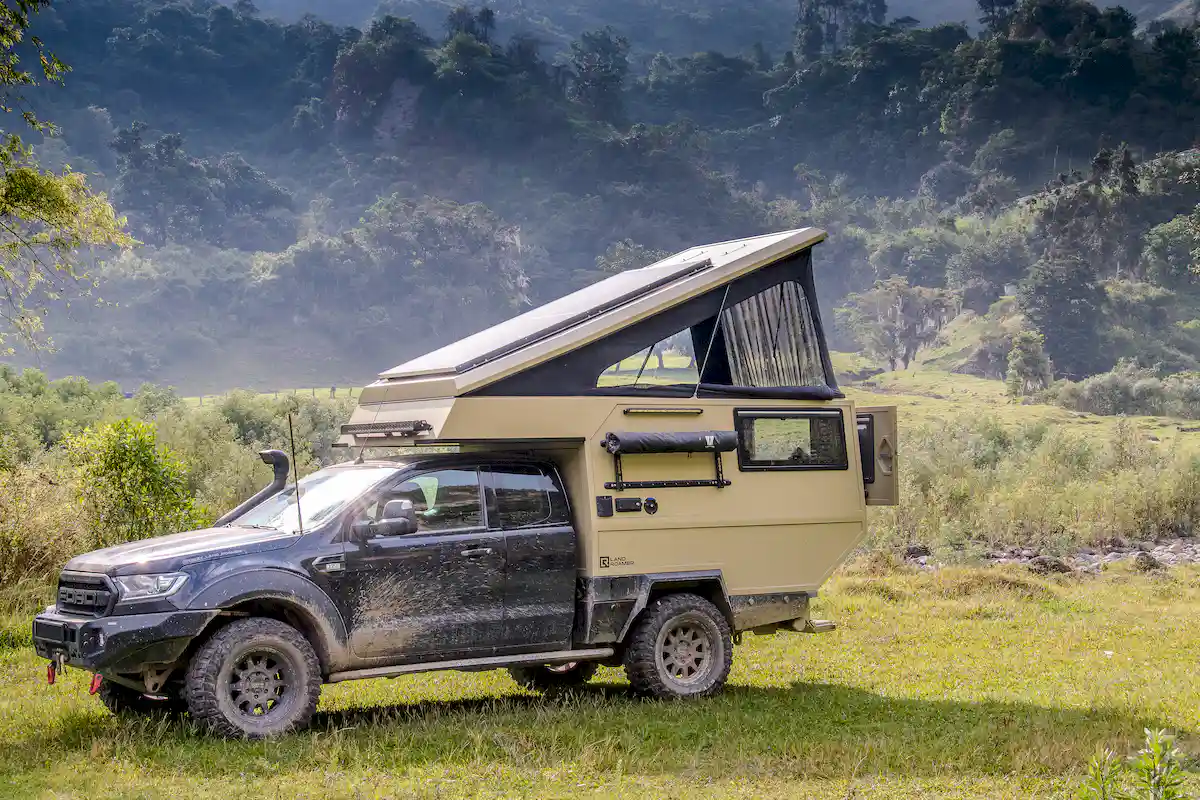
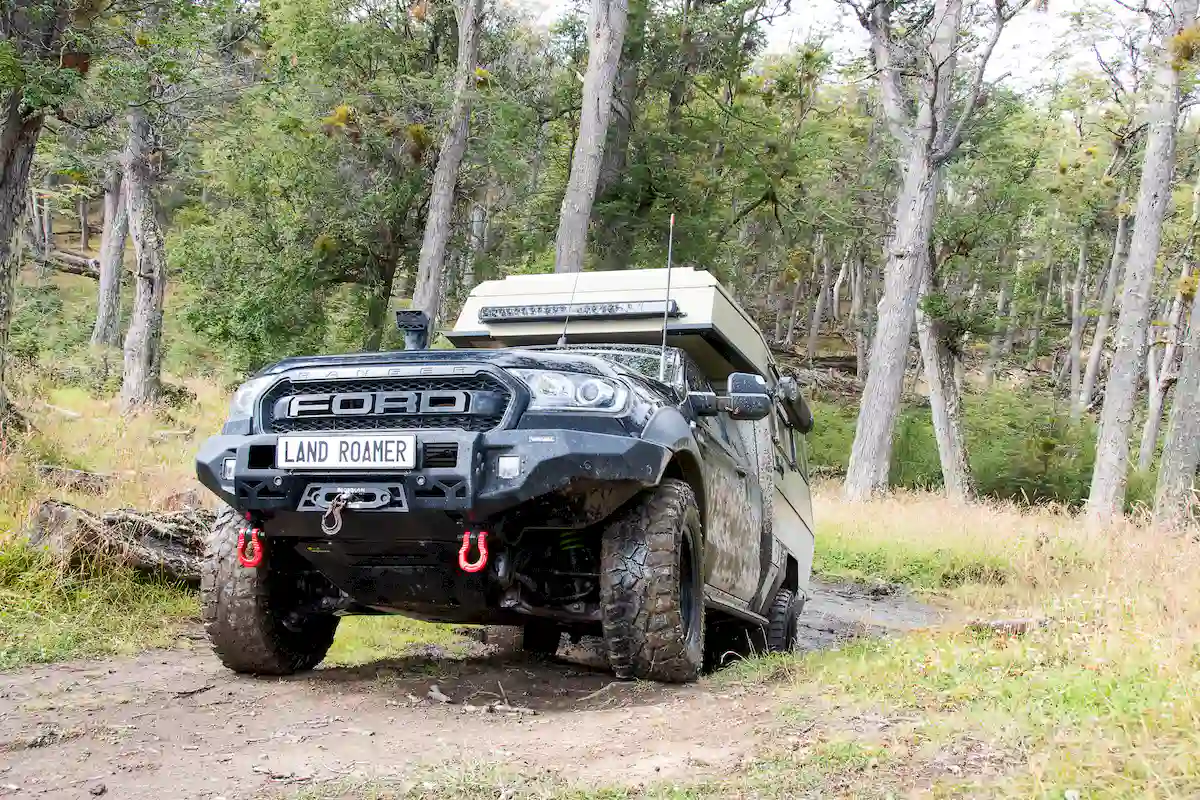
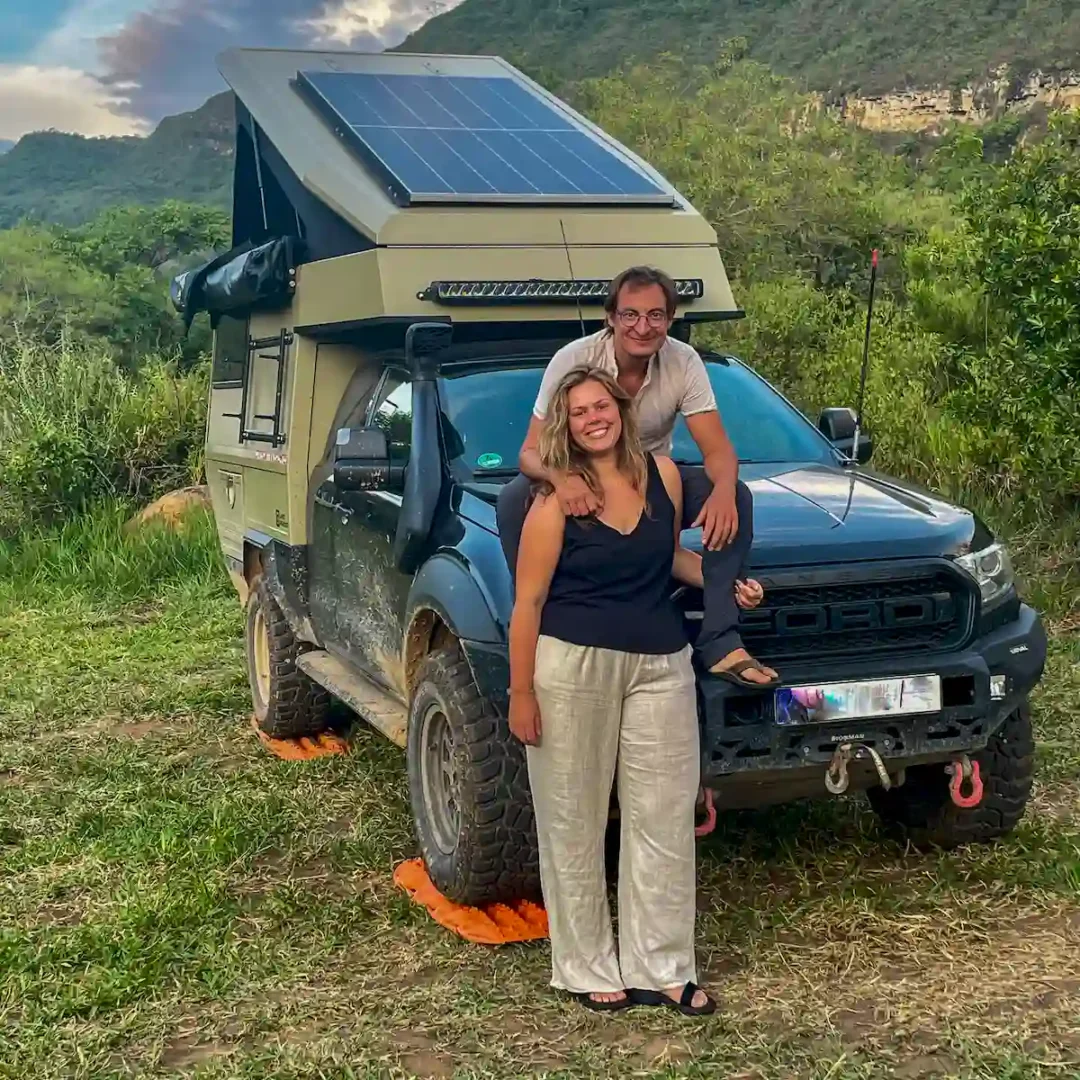
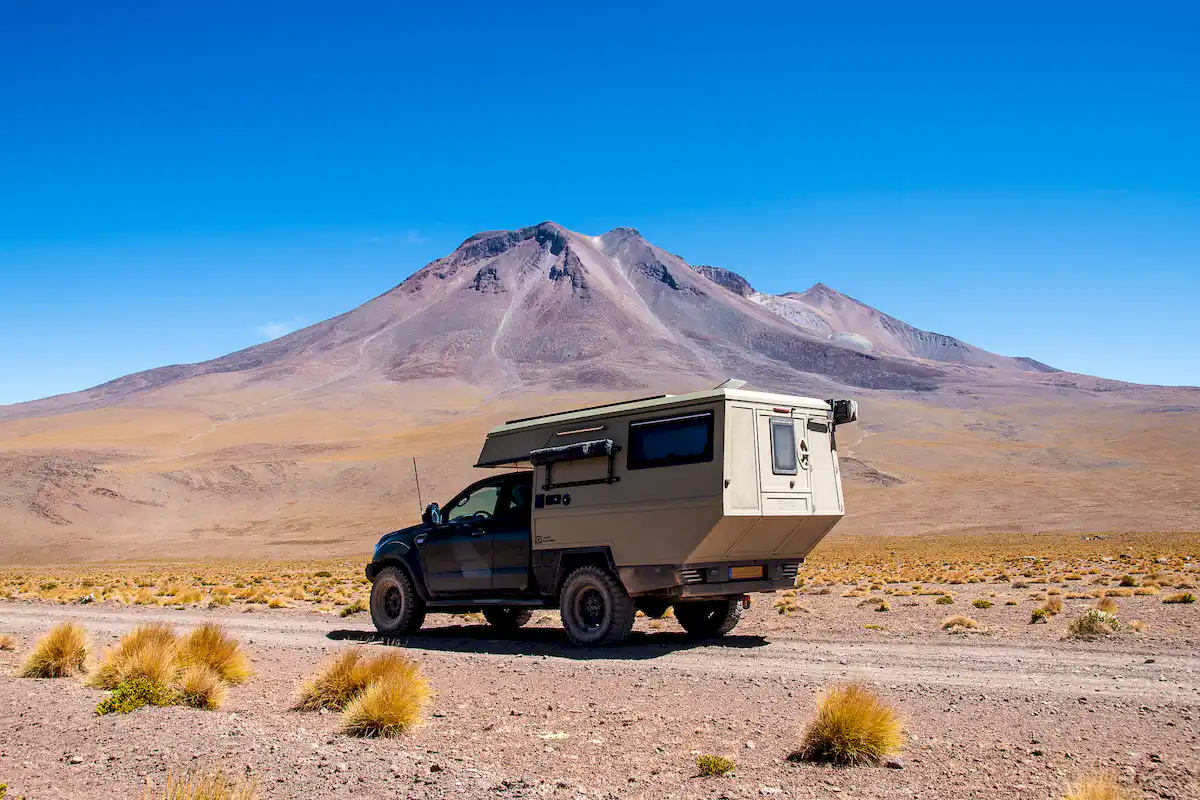
The Land Roamer Pioneer was created precisely to answer that challenge: a pickup 4×4 camper designed for those who understand adventure travel as self-sufficiency, not just a short escape.
We spoke with the team to explore the origins of the project, their vision of overlanding, and the technical decisions behind a proposal that seeks more than aesthetics: coherence between vehicle, terrain and the way you travel.
What led you to create Land Roamer and the Pioneer cabin?
It started in 2016 during a backpacking trip through Australia. Jerry rented a small camper there and was immediately fascinated by the idea of always having your own bed and personal space with you. But it was only 2WD. Every time we saw an unpaved track disappearing into the landscape, we knew: that’s where the real adventure begins — and that’s exactly where we couldn’t go.
Back in the Netherlands, Jerry bought a Volkswagen Transporter and converted it into our first camper. He designed the interior himself, had the parts CNC milled, and we travelled extensively with it for years. It gave us incredible experiences, but we kept running into the same limits: we wanted to go a little further, a little higher, a little more off the beaten path.
And honestly, a dirt road simply feels more adventurous than a motorway.
When we began dreaming about a major trip outside Europe, it became clear those limitations would only grow.
We didn’t want a rooftop tent — we had grown used to having a real home on wheels. The solutions on the market felt too industrial, too compromised, or simply not comfortable according to our standards.
So we did what we always do: we crossed out everything we didn’t want. In the end, nothing remained.
That was the moment Land Roamer was born. Not as a product, but as the answer to a simple question: what if you could combine the comfort of a real home with the freedom and capability of a true 4×4?
The Pioneer is our answer: a pickup 4×4 camper cabin built from real travel experience, not from a catalogue.
Was Pioneer your first project, or were there other vehicles and concepts before it?
No, Pioneer didn’t appear out of nowhere. Before this, I built a camper for myself where we lived and travelled for years. It wasn’t a weekend project — it was something we would still happily travel with today if we had a van.
Over five years, we learned what works in a small space — and more importantly, what doesn’t.
That period was decisive. You don’t just learn how to build something; you learn how to live in it.
What annoys you every day? What starts to irritate you after a few weeks? What still works after months?
Those lessons don’t come from a brochure.
I also designed several campers for a friend’s clients. Not as a formal business, but with the same seriousness: practical, well thought-out and adapted to real use. Each project brought new insights into layout, ergonomics and material choice.
Pioneer is ultimately the result of all that experience. Our design approach is always practical, without neglecting aesthetics. If something doesn’t look right, we keep refining it until it maintains the same functionality and becomes visually balanced.
There shouldn’t be a choice between practical and beautiful — it can be both.
Everything we learned about living in a compact space, about comfort on the road, and about what truly matters on long journeys is present in this design.
It’s not an experiment, but the outcome of years of testing, adjusting and refining — on the road, not on paper.
“… Pioneer offers the comfort of an expedition truck, without the limitations of such a large vehicle.”
Where have Land Roamer and Pioneer taken you so far, and where would you like them to take you in the future?
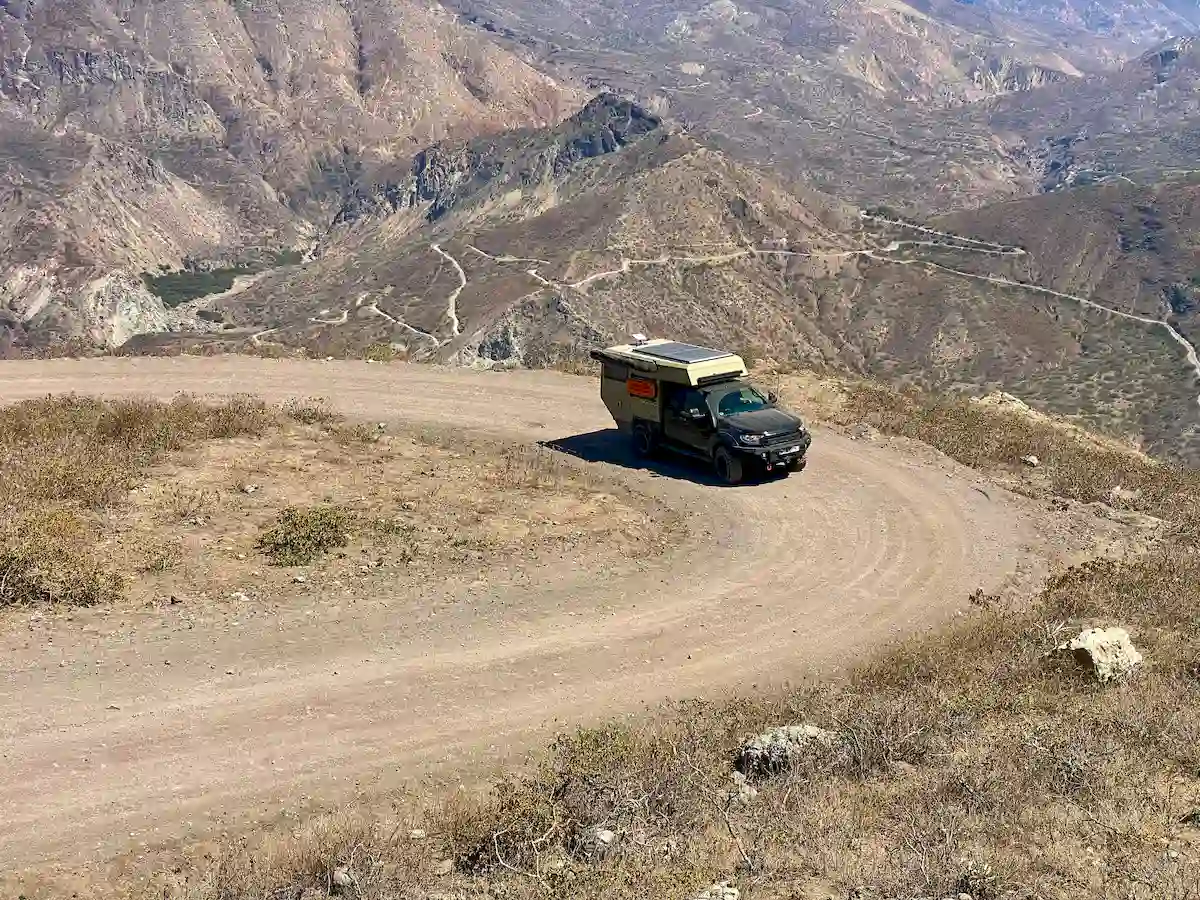
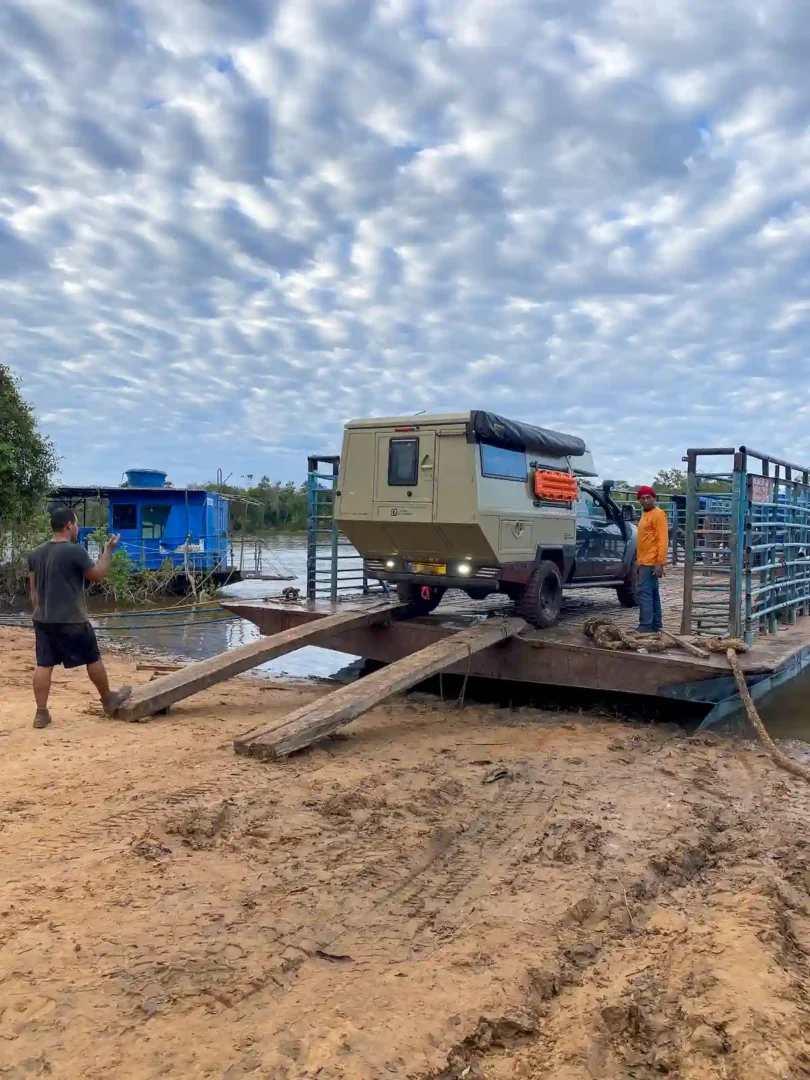
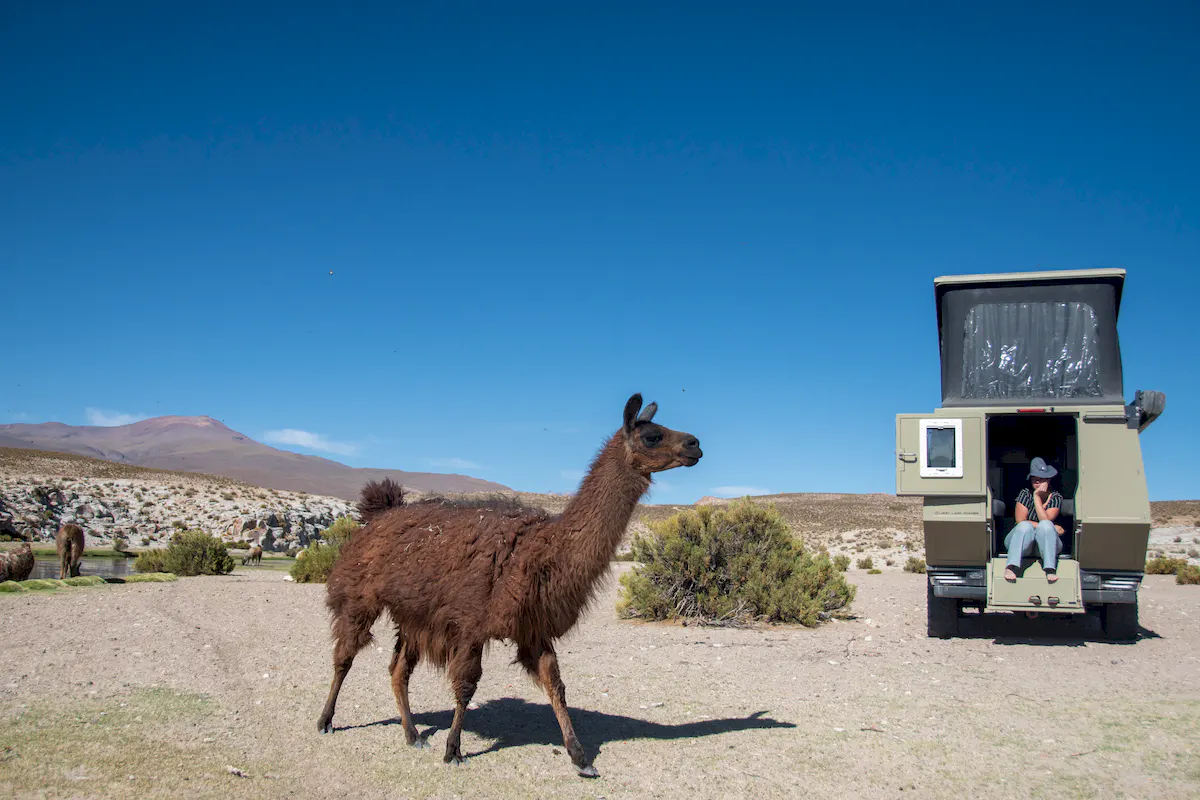
Since building the first Pioneer, we’ve experienced almost daily how pleasant it is to return “home” to the cabin after a long day of driving. Even when the GPS guided us through narrow village streets, we were glad not to be driving a large truck.
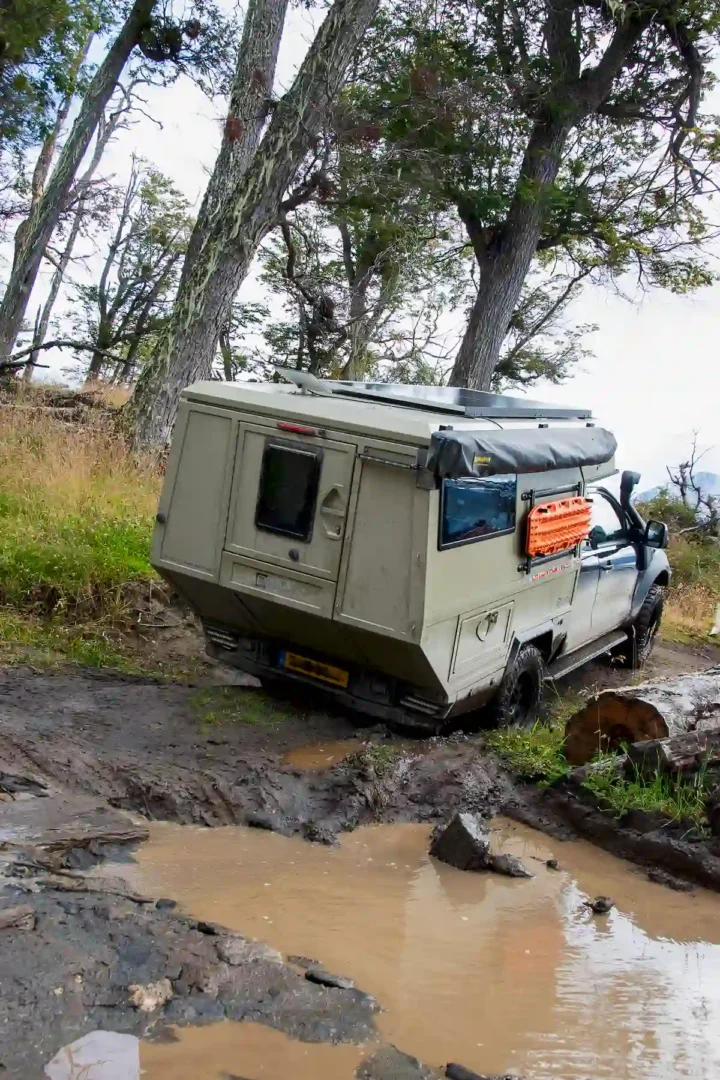
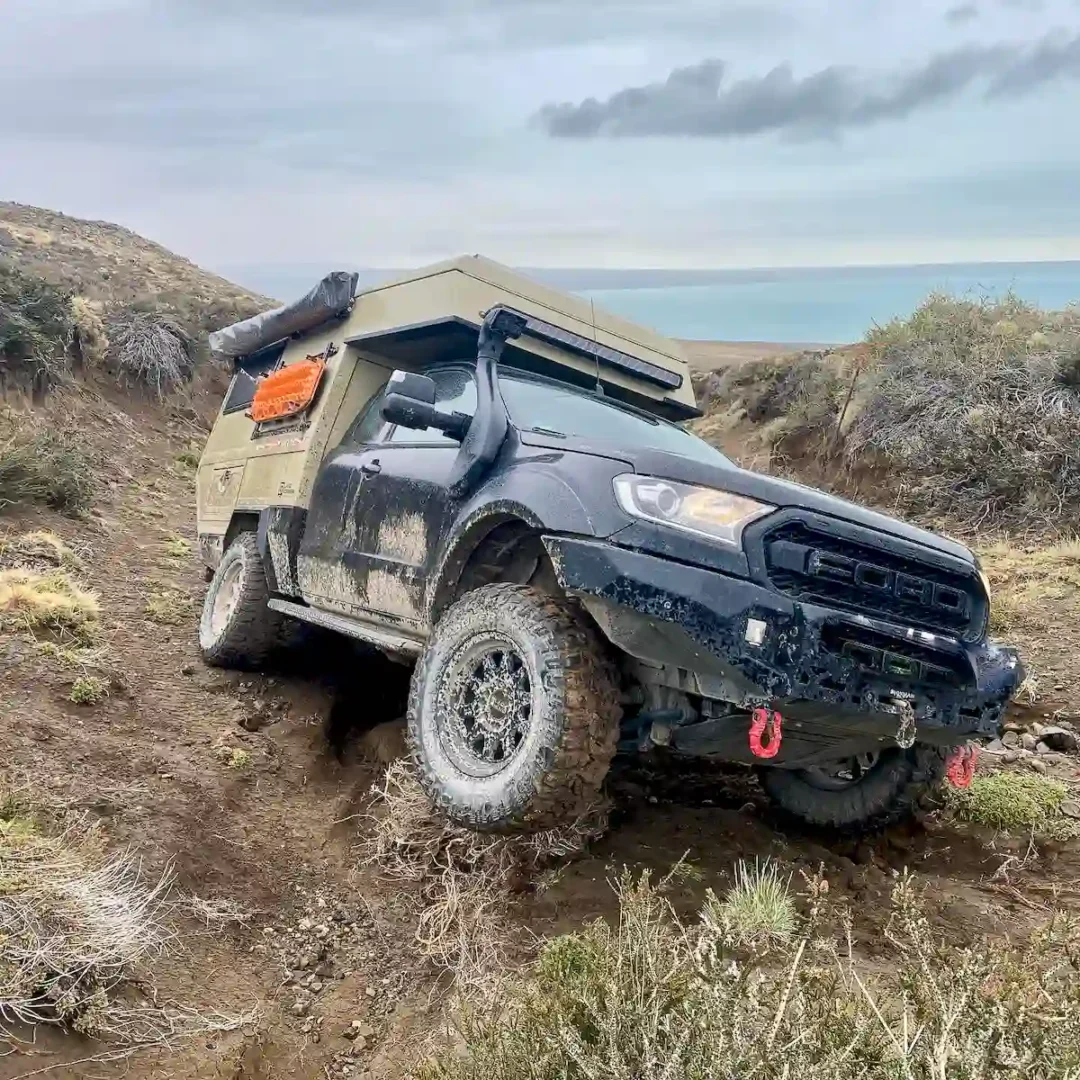
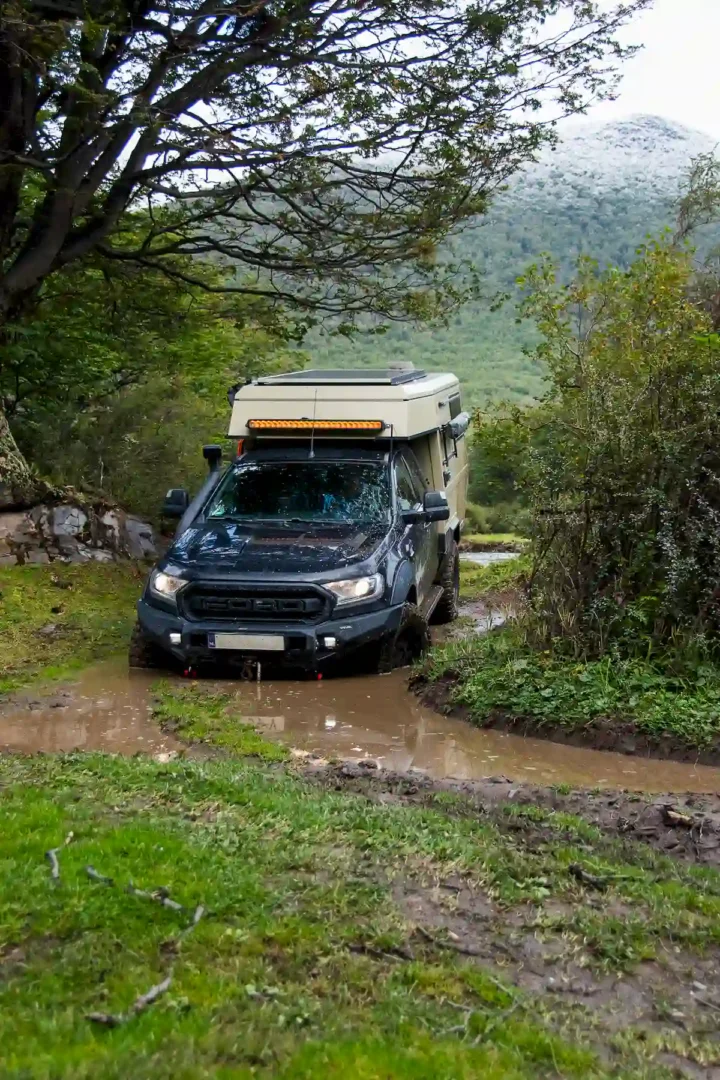
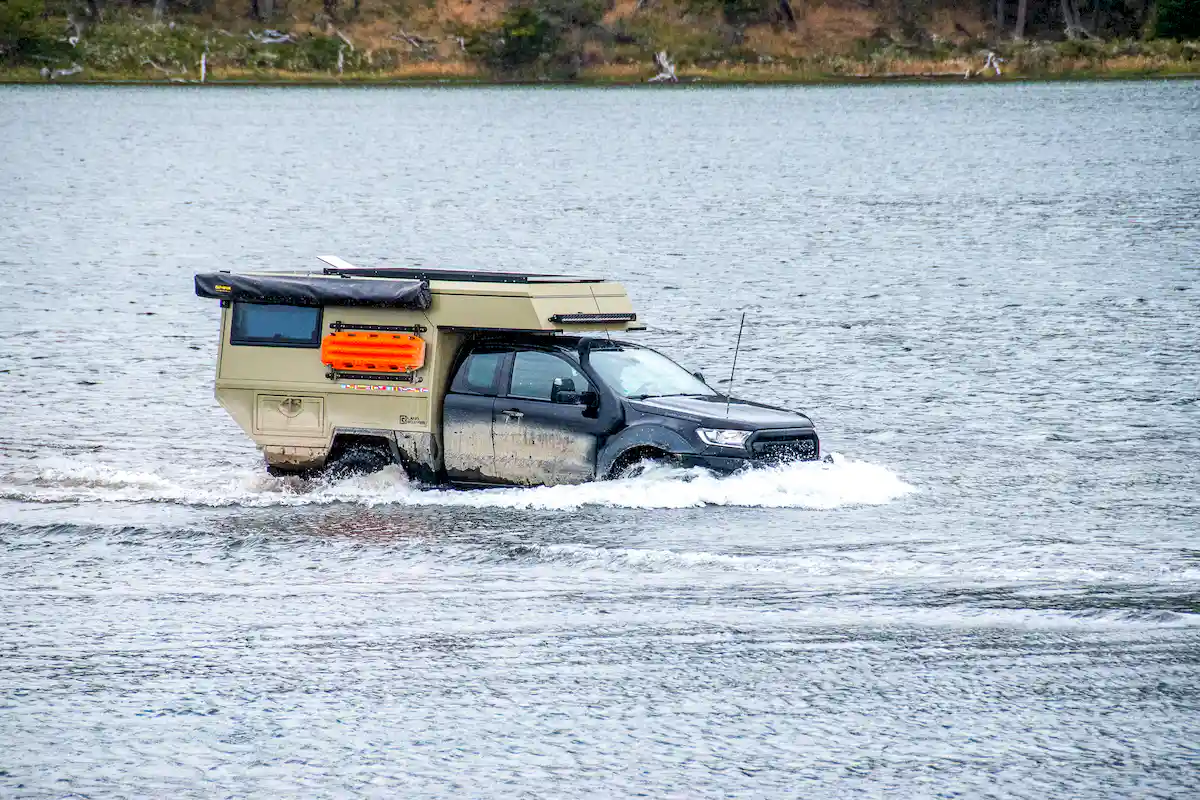
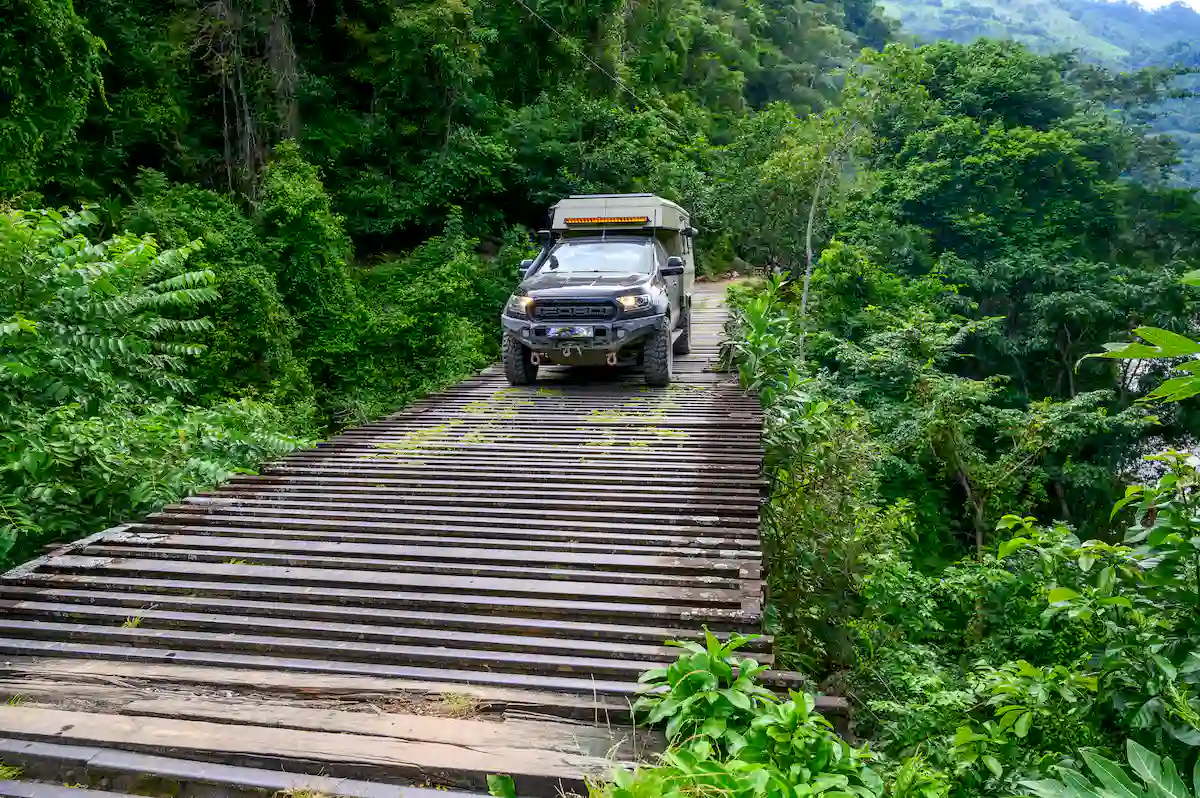
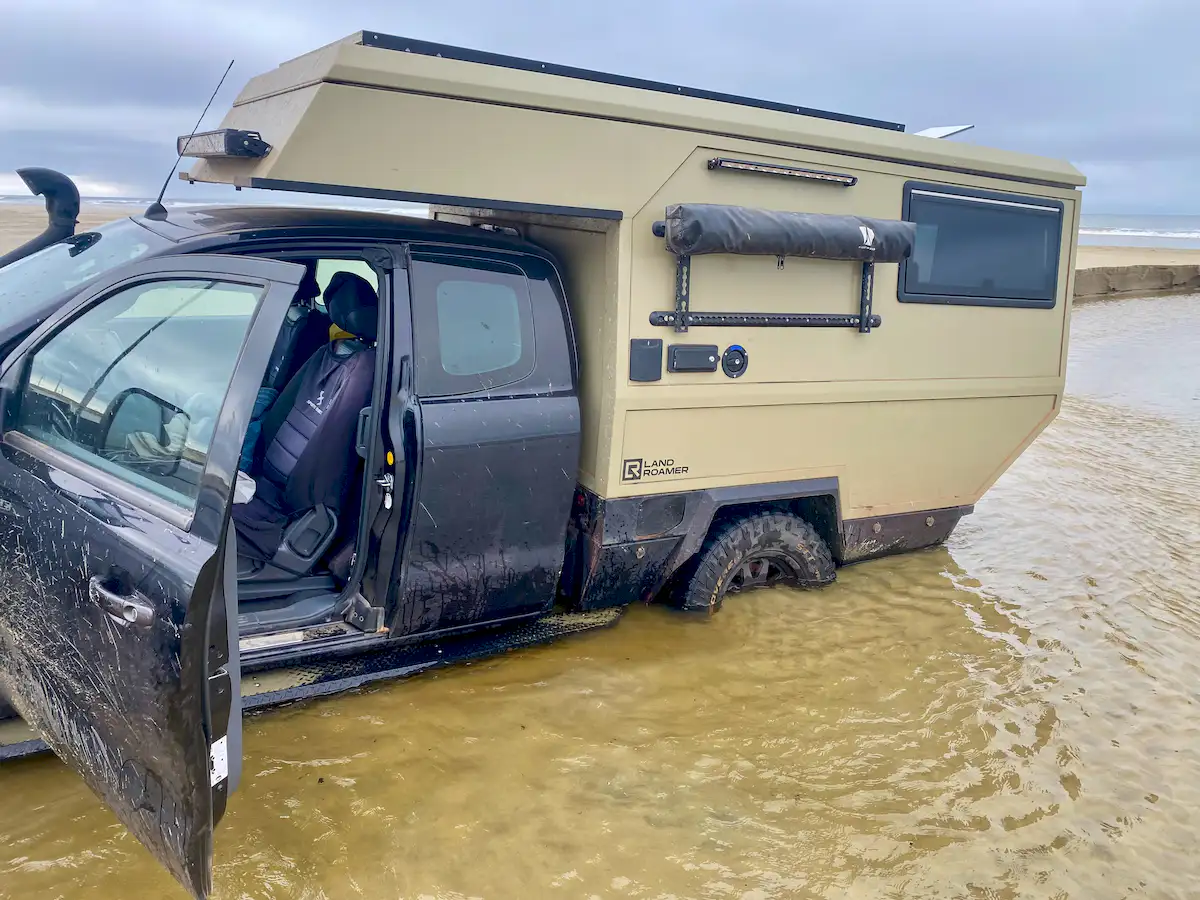
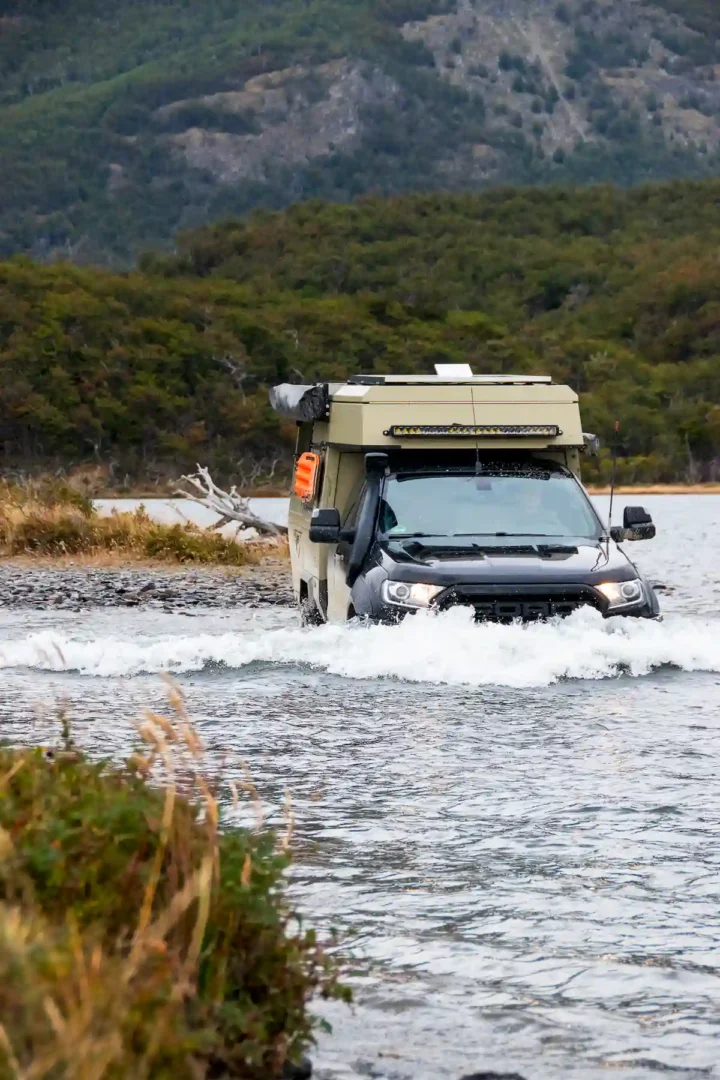
On demanding roads we never hesitated, and even rough tracks we deliberately chose on iOverlander often turned out to be less challenging than expected.
Once we were looking for a truly impassable section and I told Anniek, “let me know when it starts” — we had already driven through it without even noticing.
In the future, we see Land Roamer as a brand representing quality and refined comfort within the mid-range segment. We aim to sell internationally, in small production series.
Our target audience consists of travellers who seek comfort and a certain level of luxury, while still loving adventure.
Pioneer offers the comfort of an expedition truck, without the limitations of such a large vehicle.
That middle ground between a full expedition truck and a lightweight pickup camper is exactly where the brand positions itself.
We want Land Roamer to become a recognised reference for uncompromising quality and thoughtful detail.
For us, finishes and craftsmanship are not an afterthought, but the starting point.
In the future, we may extend this philosophy to different models, while remaining true to our core.
The future of Land Roamer can be adventurous and challenging — as long as we keep aiming higher and raising our own standards.
On a personal level, we want to continue making long and meaningful journeys, combining them with building and testing Land Roamer cabins. That’s how we keep learning what works and what doesn’t.
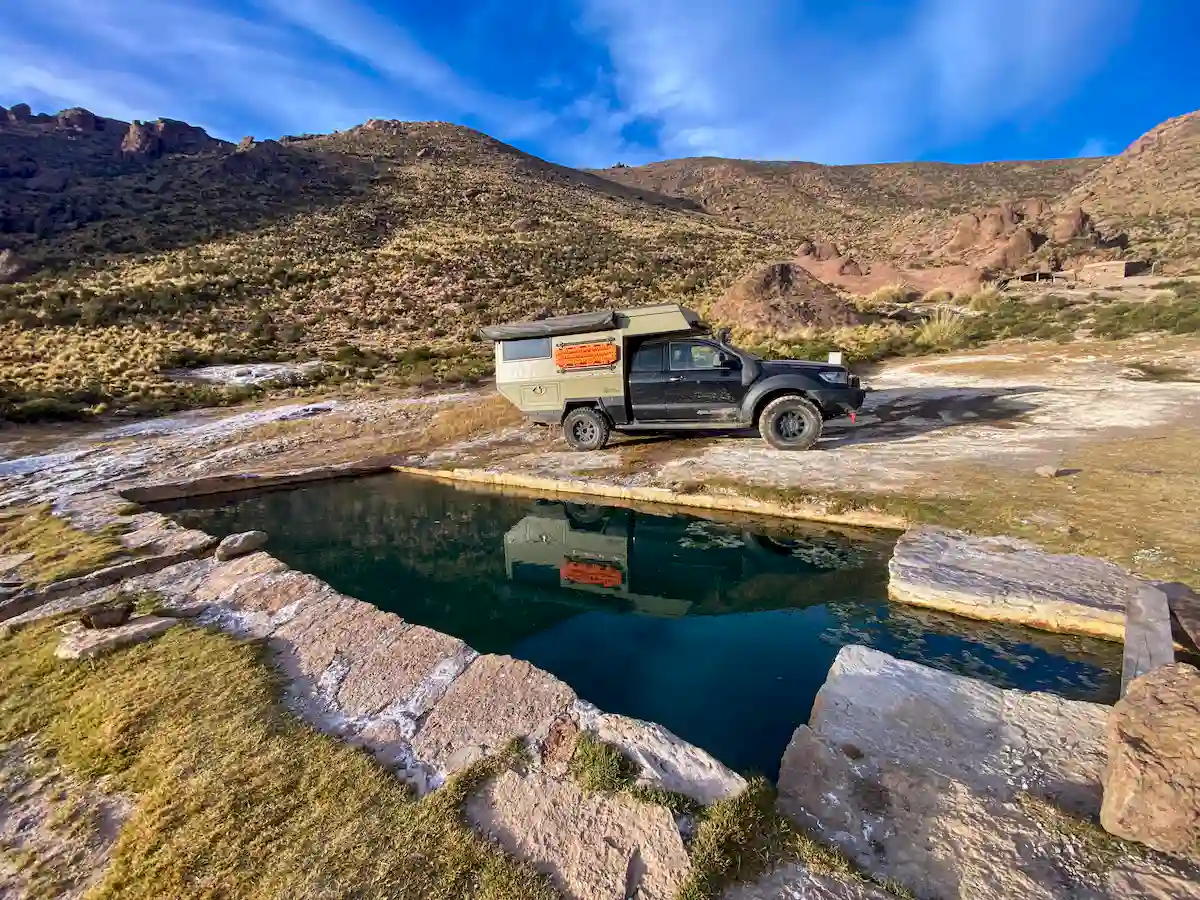
We would love to return to South America, which surprised us deeply, and we’re also drawn to Africa, especially the southern regions.
Experiencing remarkable places and using those experiences to improve Pioneer and future Land Roamer models remains central to what we do.
Do you usually plan your trips or improvise?
That depends entirely on who you ask 😉
Anniek prefers knowing what to expect and enjoys researching and planning, although this became less important as the journey progressed.
Jerry prefers travelling day by day and enjoys improvising.
At the same time, the vehicle is always carefully prepared, so we know we can face any challenge.
That freedom of not having to plan everything was one of the reasons we travelled to South America: handling visas at borders without stress and accepting that unexpected situations are part of the journey.
Travelling is hard work, even if it’s incredibly rewarding. After a long day on the road, you want to rest and feel safe and comfortable.
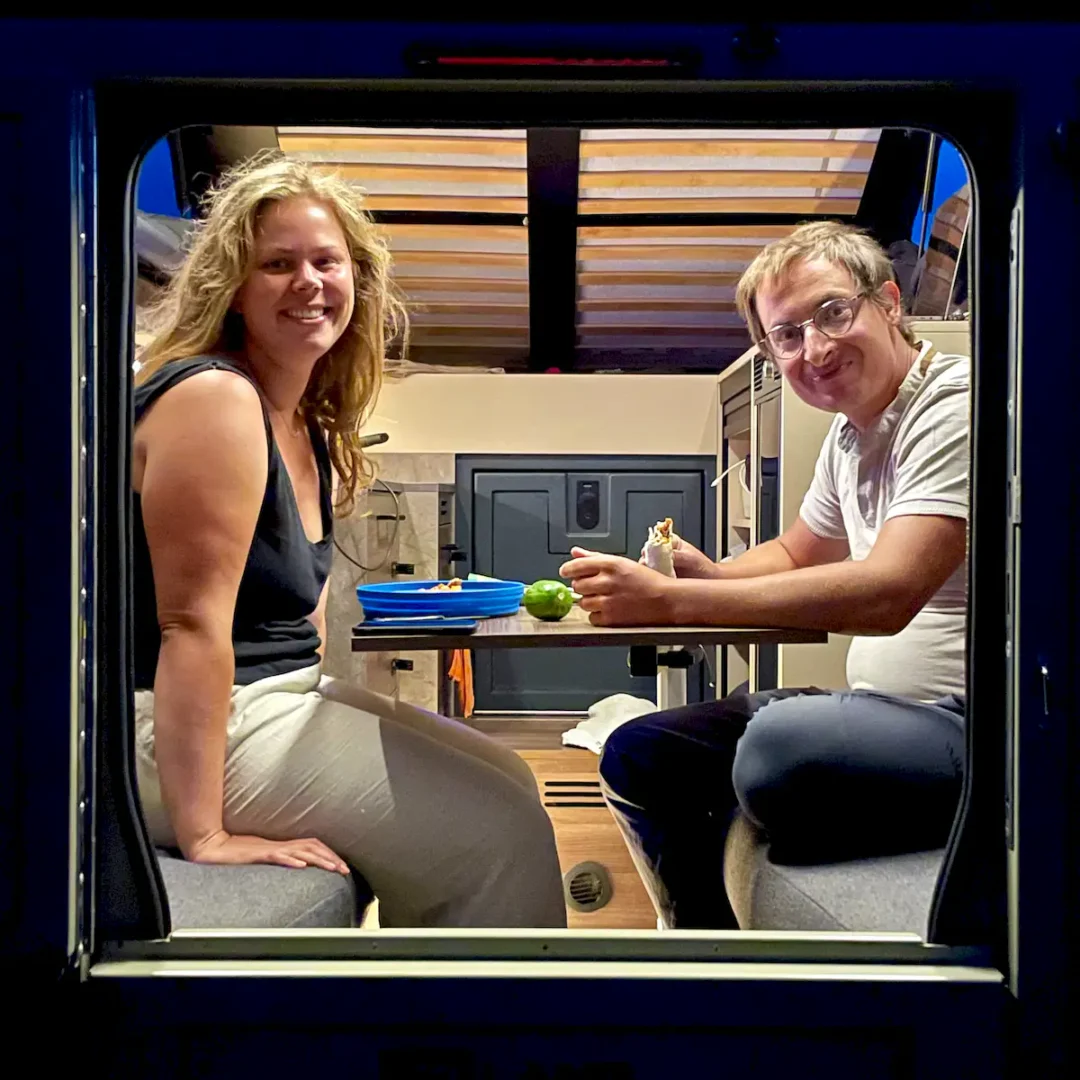
Pioneer offers that feeling of home. We’ve spoken with many overlanders who occasionally treat themselves to a hotel, but we believe that if your base setup is right, you don’t need one — you feel at home wherever you are. Even in cities, we looked for safe places to overnight rather than booking a hotel. Nothing feels as good as your own bed.
In our view, if you regularly need a hotel, your travel setup might not be properly suited to long-term travel.
On a journey, there are many daily tasks that don’t exist in a house, and everything takes more time.
With Pioneer, we’ve reduced these tasks to a minimum.
Any action you need to perform every day — or several times a day — that requires too many steps will eventually become frustrating.
We believe in simplicity: not in the construction phase, which happens once, but in daily use.
The extra time and investment during the build are more than repaid when you actually use the cabin.
What passions, ideas or philosophy lie behind the Pioneer project and Land Roamer’s approach?
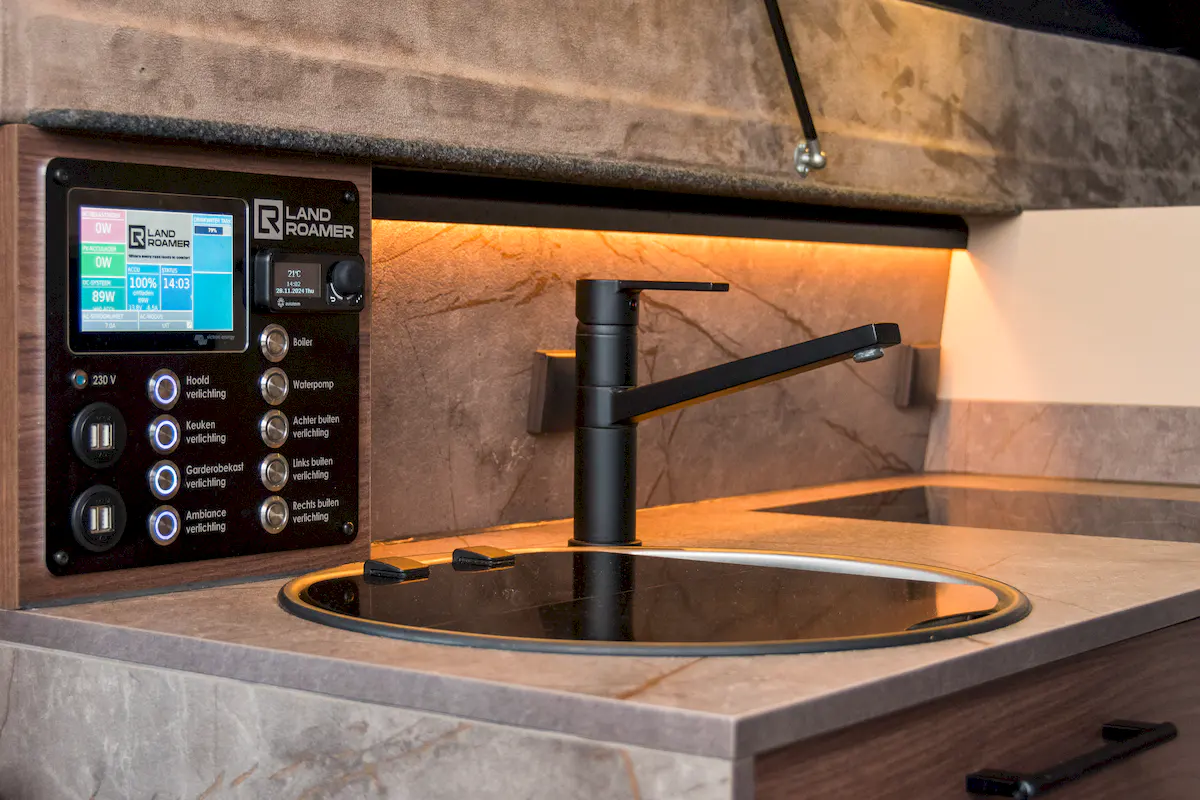
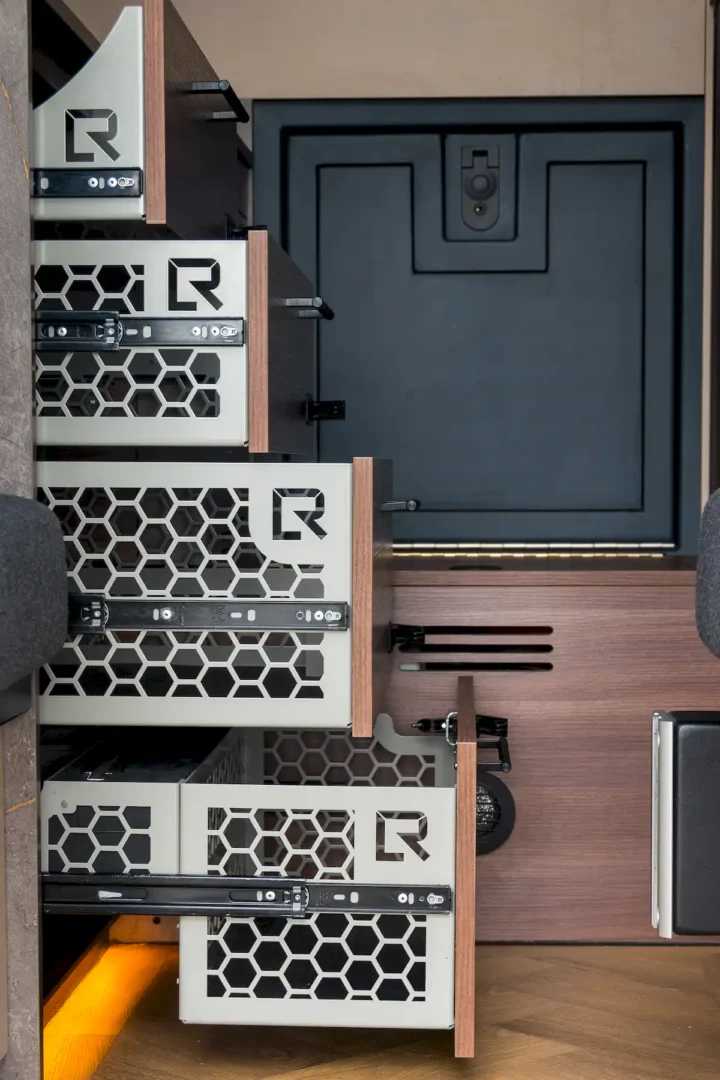
We believe daily tasks should take as little time as possible.
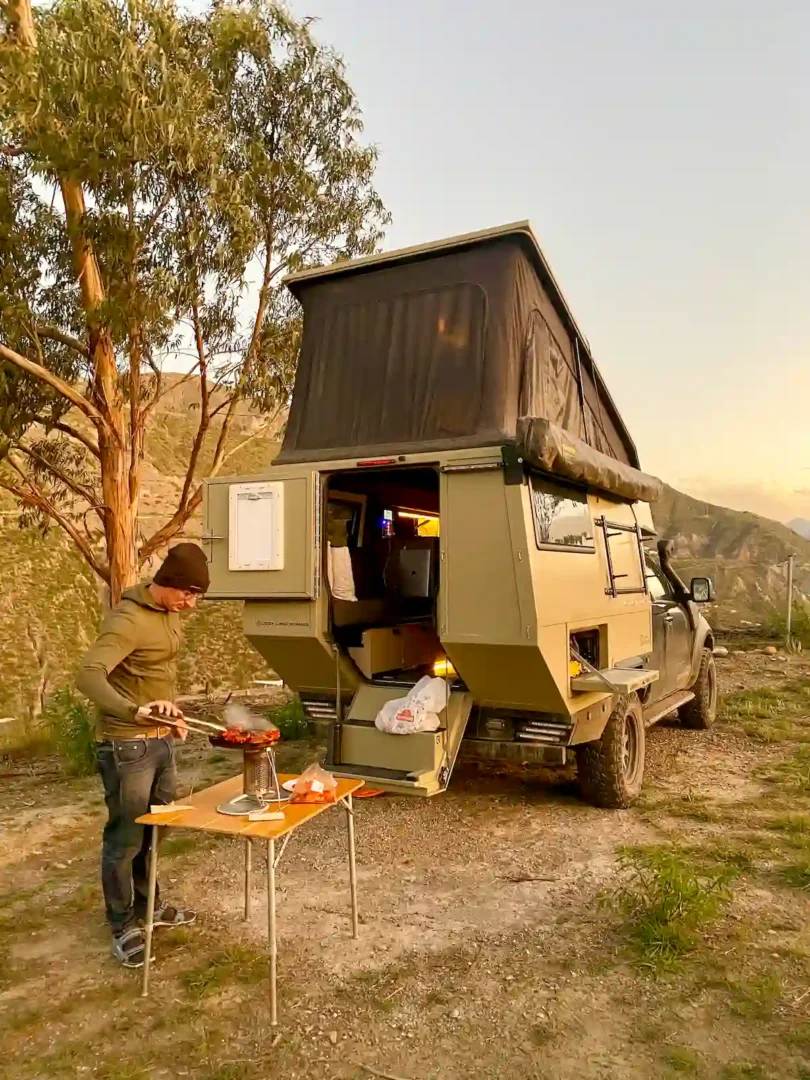
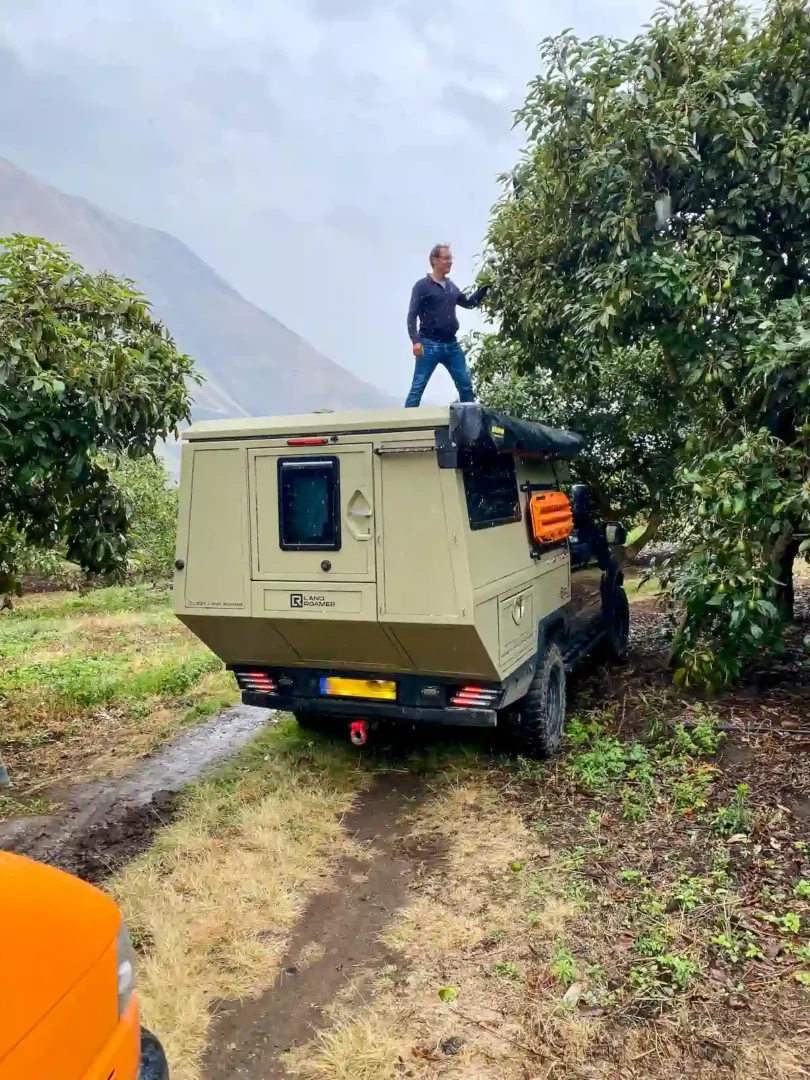
Everything should work together efficiently. That’s why we coordinated interior and exterior design from the start, allowing us to create generous interior space within minimal exterior dimensions.
This optimisation is particularly important in pickup overland setups, where every kilogram and every centimetre matters.
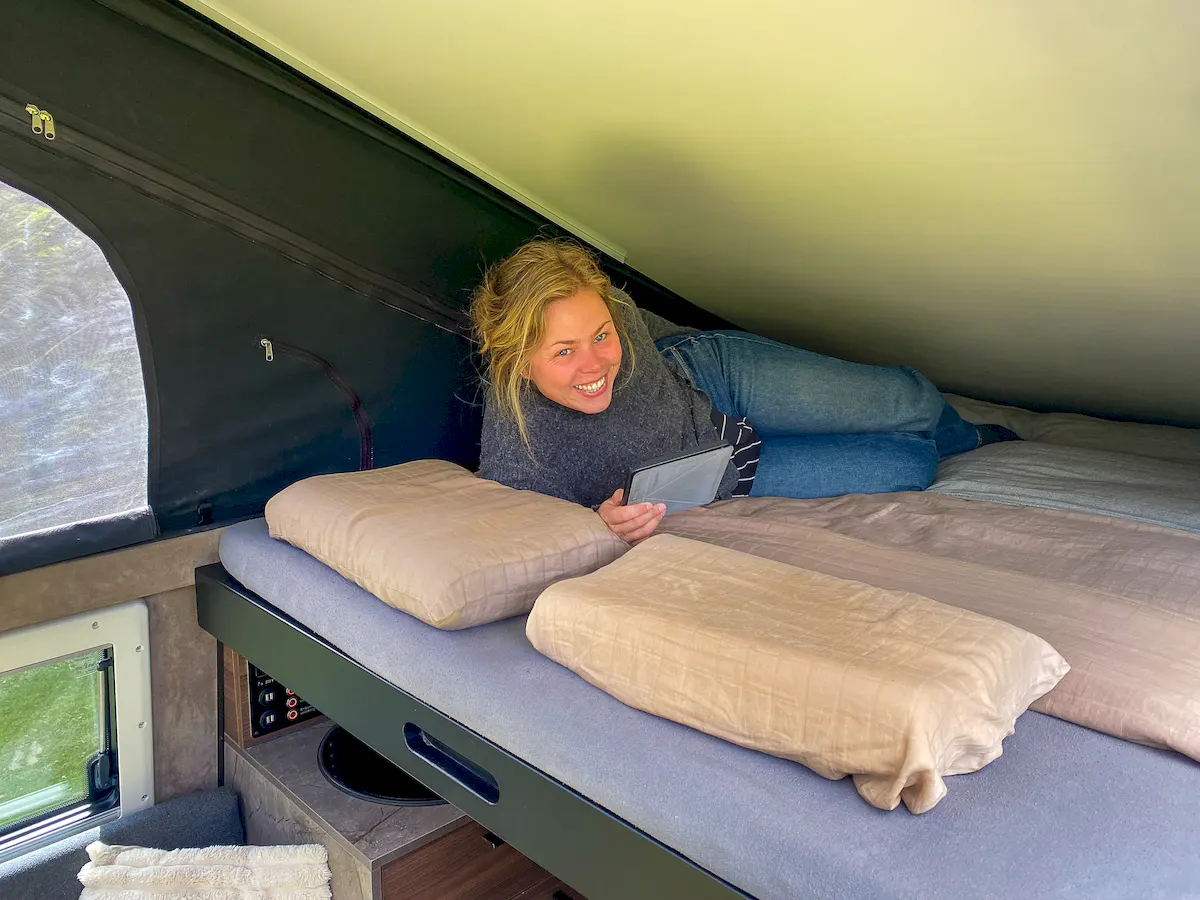
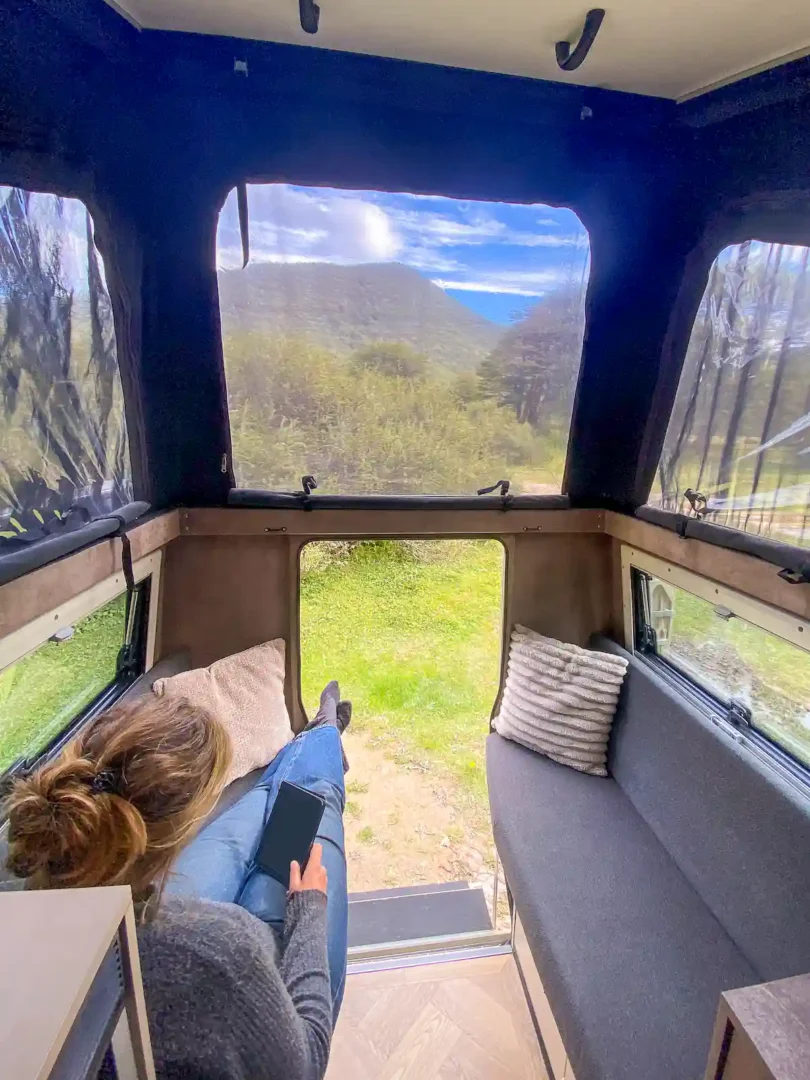
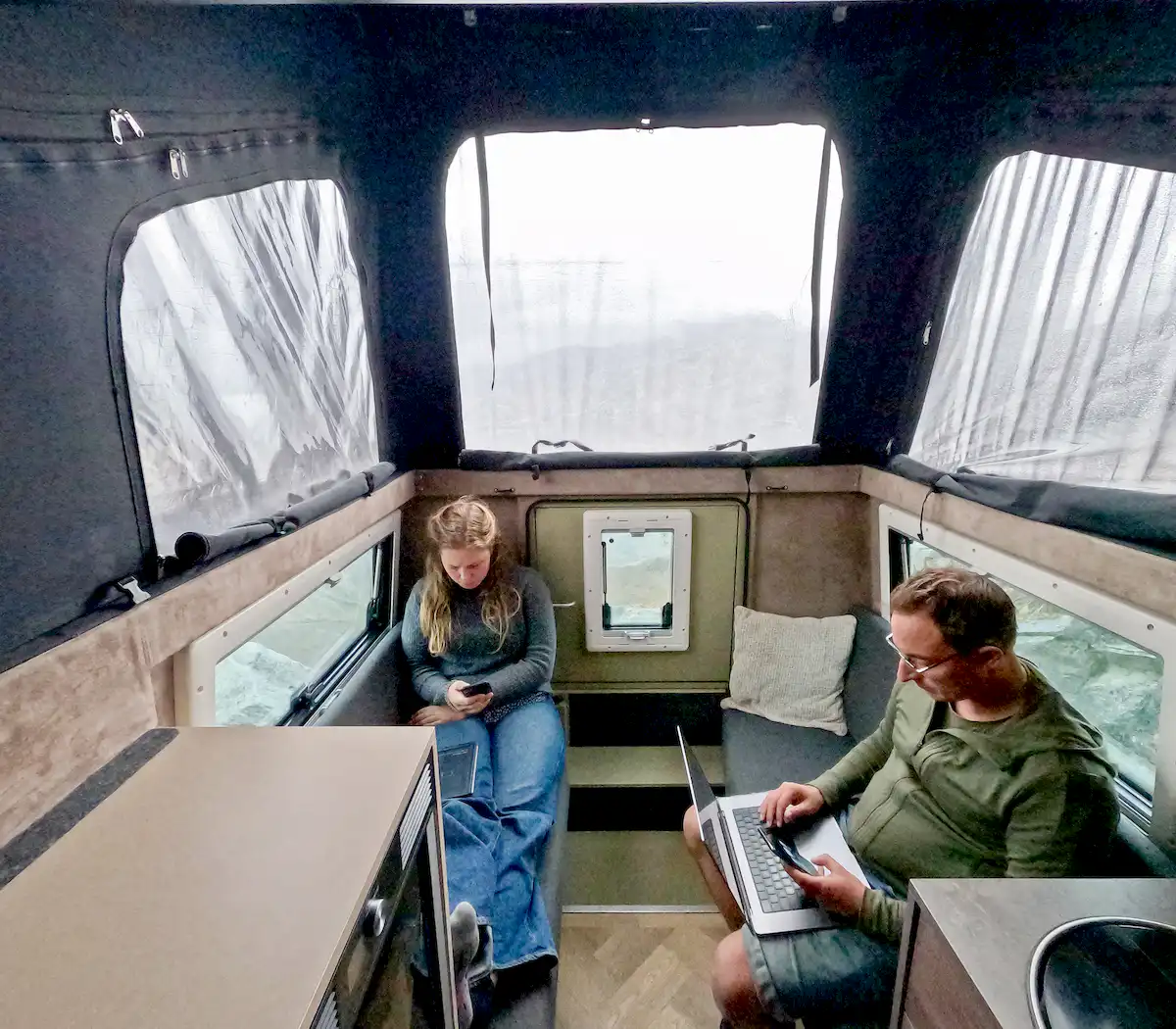
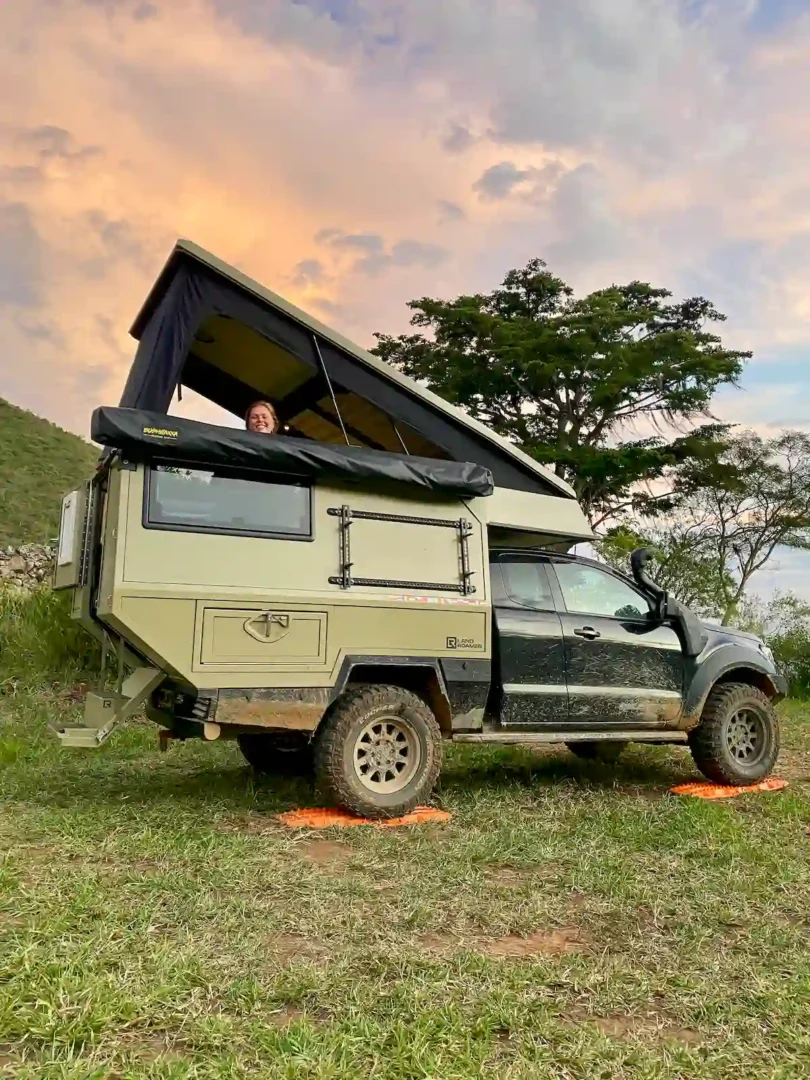
Once fully equipped, we are not much larger than a comparable vehicle with a rooftop tent and overland gear, yet four people can sit comfortably inside and everything is always ready to use.
That means less time setting up camp and more time for walking, exploring or sitting around a campfire with friends.
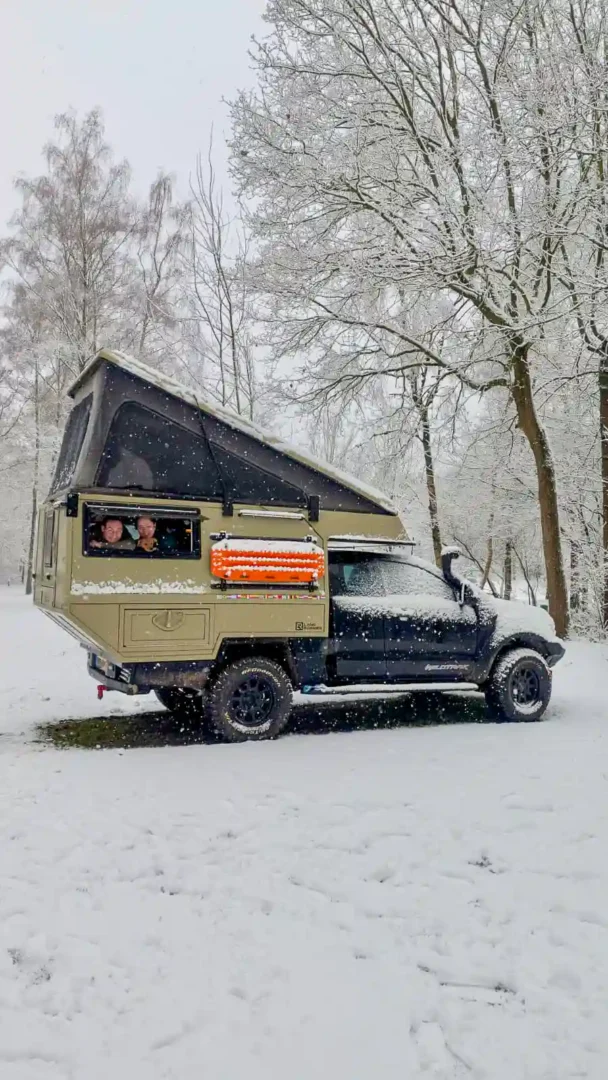
We also strongly believe in a pop-up roof. It keeps the cabin compact while driving, yet spacious when in use.
It allows for larger window surfaces, more natural light and better ventilation.
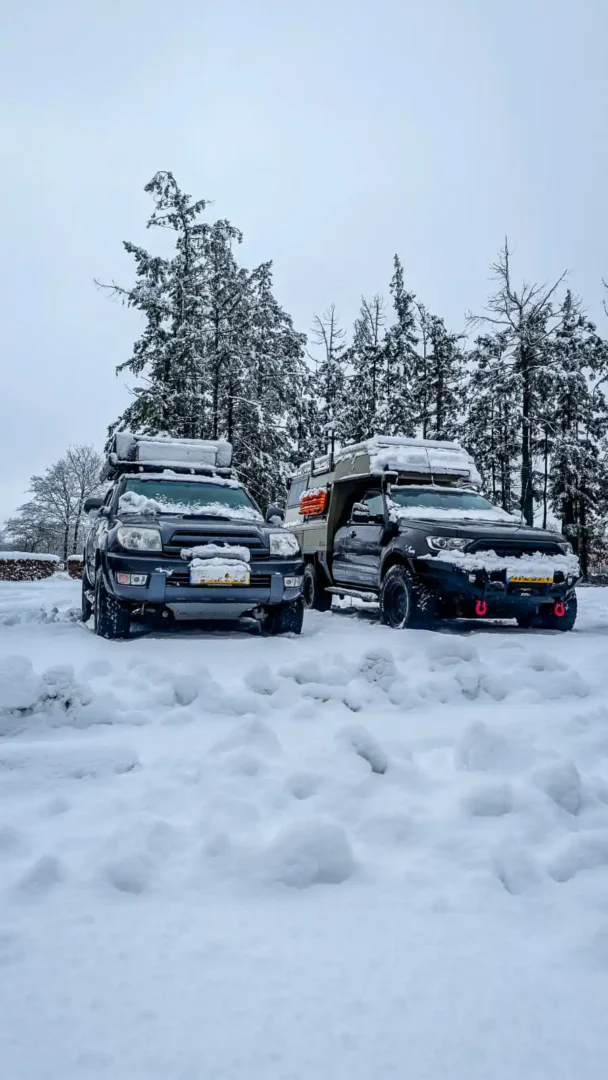
Many people worry that a pop-up roof might be too cold, but by choosing thick cotton fabric, it retains more heat than standard polyester canvas. Yes, some heat is lost through fabric, but combined with proper cabin insulation and heating, it works perfectly.
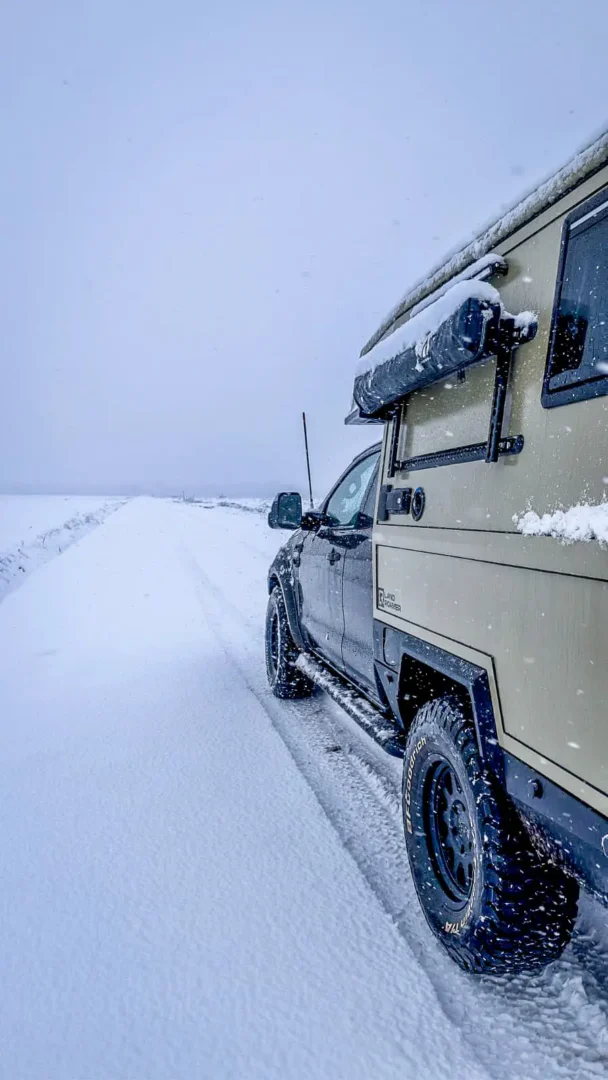
We have travelled in temperatures down to -10 °C, and the heater rarely needed to go beyond its lowest setting.
Have you experienced difficult moments, technical problems or unexpected situations during your travels?
After building our first prototype, we identified a few small details that could potentially become long-term issues, such as the positioning of the gas struts.
Even when working with specialists, mistakes can happen.
That’s why we addressed these points in the second prototype with small but important adjustments.
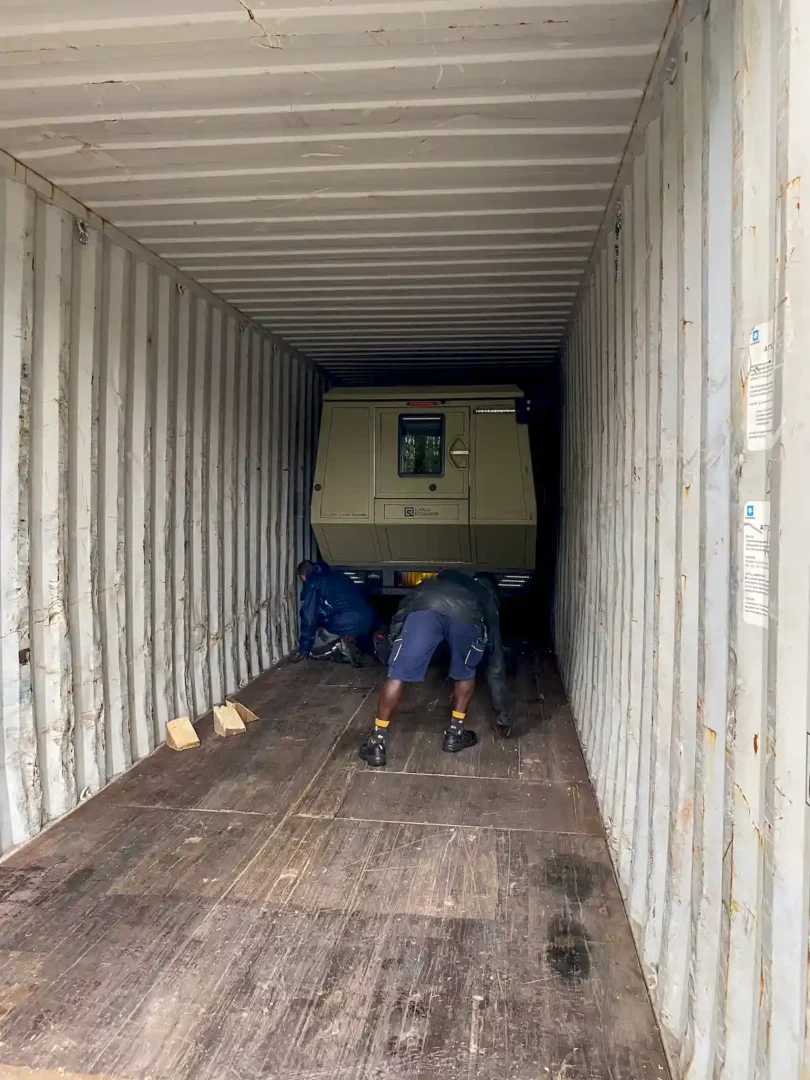
We completed the second vehicle almost on the same day it had to be loaded into a container for shipment to South America, so we couldn’t test it beforehand.
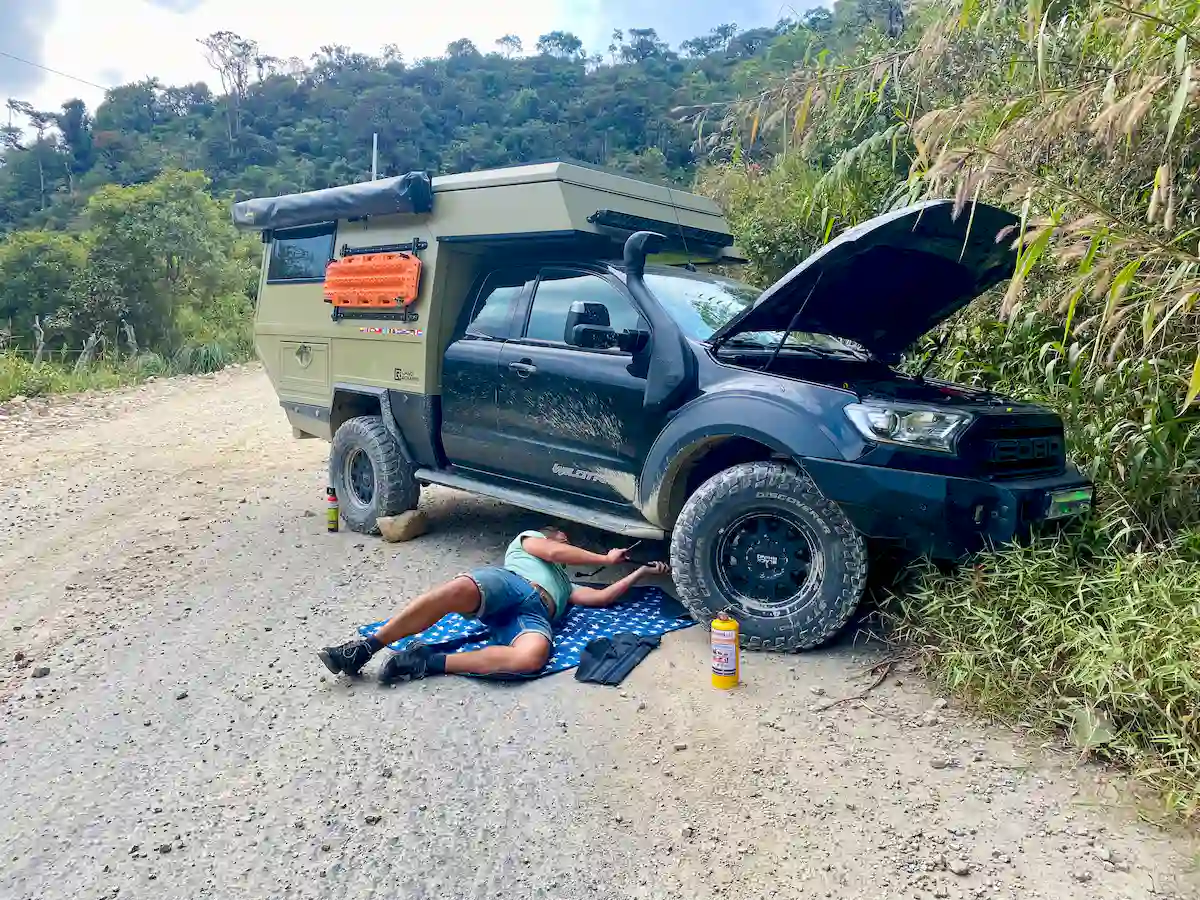
During the trip, we only had a minor adjustment to make to the cabin, which we resolved quickly. We did encounter some more significant issues related to the base vehicle (such as the braking system), but these were not related to the camper unit itself.
Even if there had been no problems at all, we strongly believe continuous development is essential.
Extensively testing our own products allows us to identify potential weaknesses before our customers do.
If Land Roamer could share one lesson learned on the road, what would it be?
During our travels, we learned to trust our instincts when reading people.
We also realised that you don’t need to be the best at everything — but you should work with the best specialists in each field to deliver the highest quality product.
In a growing pickup overland market, proposals like the Pioneer reflect the evolution of the pickup 4×4 camper cabin:
lighter, more compact solutions designed for real-world travel.
Beyond design or finish, what truly matters is coherence — between base vehicle, terrain and the way you choose to travel.
To visit their website and get more information, click here.
Respect for the environment, nature, and the regulations of each country
See you on the way!
InterInterview: Overlanding the World with Albo. The Land Rover Defender Camper from Next Meridian Expedition.
Visit our YouTube channel